704-676-6023
Articles
7 Cold-Weather Brake Problems That Can Stop Your Truck in Its Tracks
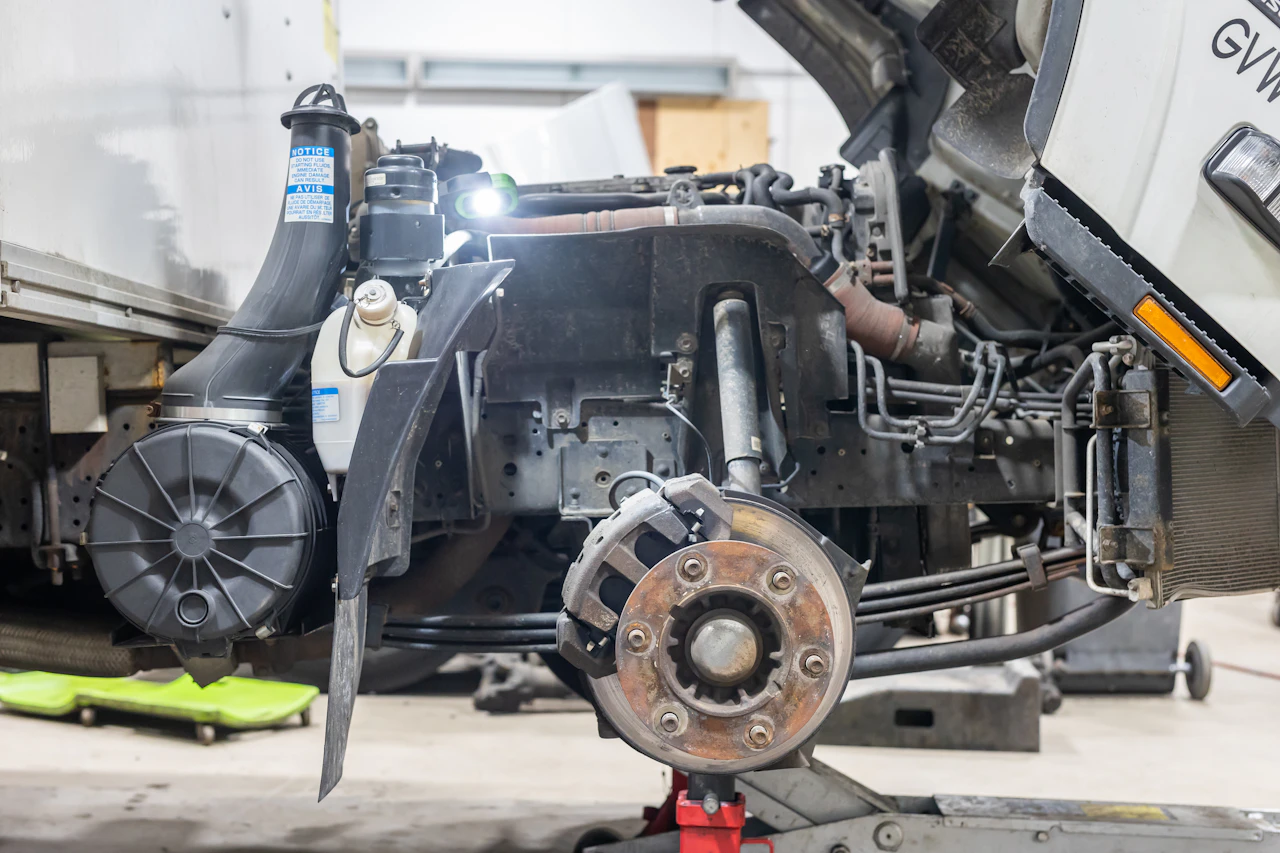
Nothing tests a heavy-duty truck quite like a Southern winter. North Carolina may not see sub-zero blizzards daily, but when the temps drop, the moisture rises, and that spells trouble for your air brake system. Your brakes, after all, are only as reliable as the components behind the pedal. When icy air, road salt, and condensation creep into the system, it’s not long before things go sideways.
Let’s take a look at seven cold-weather brake problems that can grind your operation to a halt, and how to keep your fleet rolling even when Jack Frost starts knocking.
1. Frozen Air Lines
First up, and most common, is frozen air lines. It only takes a tiny bit of moisture in your compressed air system to wreak havoc. When overnight temps dip, and your truck sits idle, that moisture can freeze inside the air lines, valves, or air tanks, creating blockages that prevent proper airflow to the brake chambers.
The result? Brakes that don’t release—or worse, don’t apply at all. That’s a recipe for roadside delays.
Prevent it:
- Drain air tanks daily.
- Check the air dryer function regularly.
- Replace old desiccant cartridges before winter.
2. Faulty Air Dryers
If the air dryer is the lungs of your air system, then winter is the pneumonia. Your air dryer is designed to remove moisture from compressed air before it enters the rest of the braking system. But if it’s malfunctioning, that water gets through—and you’re on borrowed time.
In cold, humid conditions like those in North Carolina, air dryers must work harder. A failing unit can cause waterlogged tanks, frozen lines, and full brake failure when you need them most.
What to look for:
- Excessive water during tank drainage
- Frost near the purge valve
- Unusual hissing or leaking
3. Seized Slack Adjusters
Slack adjusters are mechanical arms that help maintain the correct distance between your brake shoes and drums. But when road salt, ice, or grit builds up, those adjusters can seize. If they're not doing their job, your brake stroke becomes ineffective, leading to reduced stopping power or brake drag.
Automatic slack adjusters can compensate for wear, but not when they're corroded or frozen in place.
Solution:
- Inspect and lubricate adjusters routinely.
- Replace any that are slow to react or rusted solid.
4. Cracked Brake Shoes
Brake shoes take a pounding in the winter. Between temperature fluctuations, hard braking on slick roads, and exposure to de-icing chemicals, brake shoe materials can crack or delaminate. A cracked brake shoe won’t just reduce friction—it could completely fracture under pressure.
Especially in mountainous terrain or hilly routes like those in western North Carolina, compromised brake shoes are a serious safety concern.
Fix it before it fails:
- Inspect for visible cracks or excessive wear.
- Replace in pairs to maintain balance.
- Use high-quality, winter-resistant friction materials.
5. Corroded S-Cams and Bushings
Ice and salt mess with roads. They also chew through your S-cam bushings and linkages, too. Corrosion increases rotational resistance, which leads to inconsistent brake force application across the axle. This can result in one wheel doing all the stopping, and the other coasting dangerously.
Over time, this uneven braking eats through your brake shoes and drums, and eventually warps them altogether.
Stay ahead of it:
- Check for play in the S-cam shaft.
- Grease bushings with winter-rated lubricant.
- Replace any component that binds, squeaks, or sticks.
6. Stuck Brake Chambers
The brake chamber is where compressed air turns into mechanical force. Cold weather can stiffen diaphragms or freeze internal springs, especially in older chambers with compromised seals. A frozen or stuck brake chamber can cause brakes to stay applied even after you release the pedal, leading to dragging or locked wheels.
Worst case? You can’t move at all.
Watch out for:
- Brakes not releasing
- Odd noises during brake application
- Sluggish pushrod travel
Replace aging brake chambers before they trap you in a winter shutdown.
7. Uneven Brake Wear from Salt and Ice
Winter driving conditions often create uneven brake wear, especially when one side of the truck is exposed more heavily to slush, grime, or salted road spray. Corrosion and gunk buildup can cause one side of your brakes to wear faster than the other, which throws off balance and reduces effectiveness.
Over time, this leads to premature drum or rotor wear, vibrations, and unstable braking—especially when loaded heavily.
Counter the damage:
- Wash undercarriages regularly to remove salt.
- Rotate brake components during maintenance.
- Always inspect both sides, not just one.
Call for Professional Winter Brake Inspections
Cold-weather brake issues aren’t just frustrating—they’re dangerous and expensive. The good news is, most of these problems can be avoided with seasonal inspections, regular maintenance, and timely replacements.
At National Fleet Management, we specialize in keeping North Carolina's fleet vehicles safe, no matter what winter throws your way. Our technicians know what to look for, how to fix it fast, and how to keep your brakes from freezing, dragging, or failing. Don’t wait for winter to bring your fleet to a standstill—let us help you stay ahead of the cold. For more information about diesel trucks, read our article on driveline health.
Schedule service with National Fleet Management today!
More Articles
October Fleet Maintenance for I-85 Trucks: Cooling, Tires, Brakes, and Batteries
October gives I-85 fleets a timely chance to catch summer wear before it becomes fall downtime. Focus on cooling systems, tires, brakes, and batteries after months of heat and high mileage across Charlotte, Greensboro, Durham, and North Carolina's Piedmont.
Read more
Why High-Mileage Piedmont Fleets Need More Than Basic Oil and Filter Changes
High-mileage Piedmont fleets need more than fresh oil and filters. Learn how duty-cycle-based inspections of cooling, brakes, tires, electrical systems, drivelines, aftertreatment, and trailers can help reduce preventable downtime.
Read more