704-676-6023
Fleet Repairs
Changing oil and fluids regularly is the most important aspect of any preventive maintenance regimen. Here at National Fleet Management, we have oil and fluid services of all kinds. Whether you need a transmission fluid change or a coolant flush, we’ve got you covered.
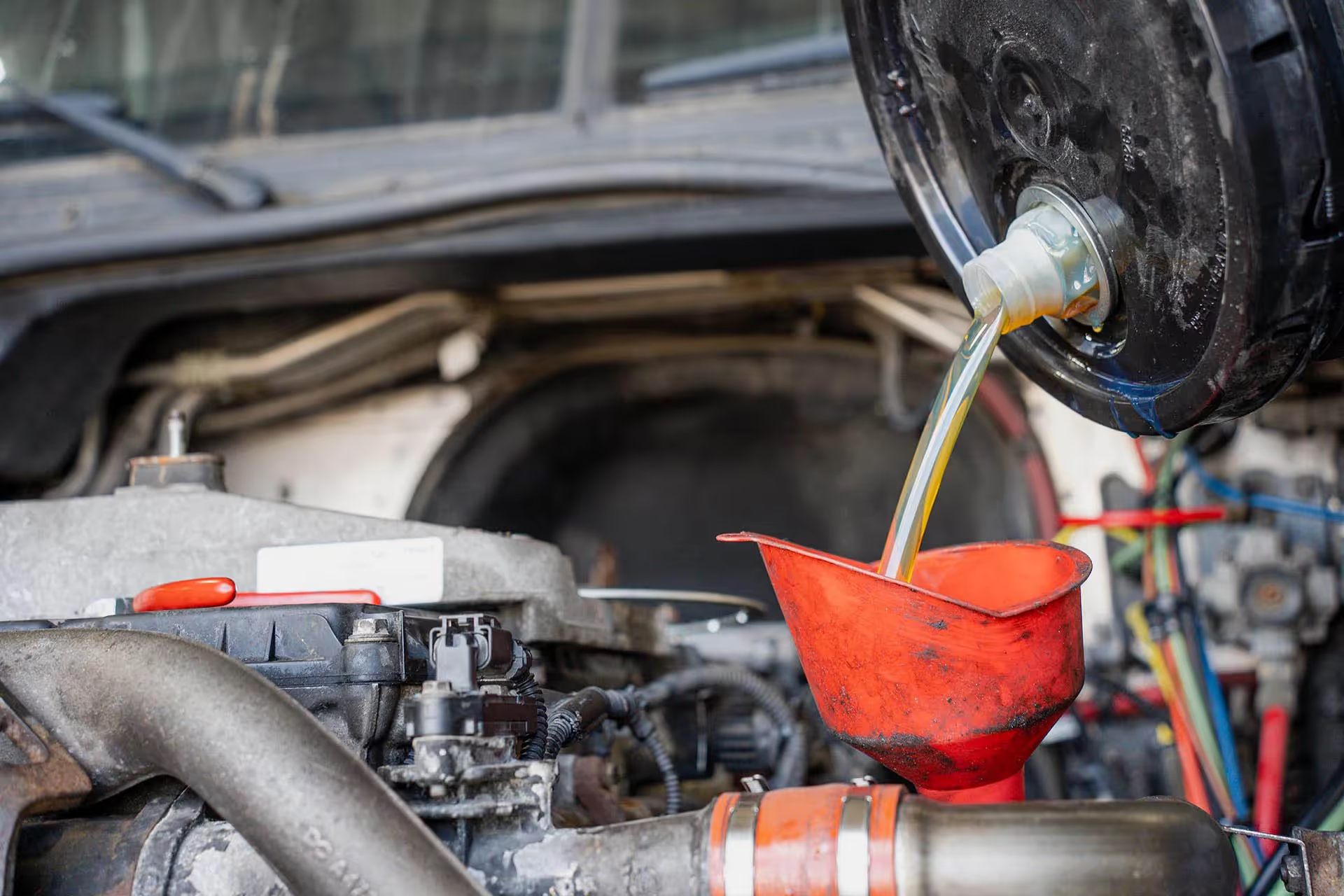
Changing your oil and fluids on a regular basis is very important. Over time, the fluids that lubricate and absorb heat break down and become less effective. If left unchecked, this could lead to excess amounts of heat and friction that could cause critical harm to your heavy-duty vehicle. For example, if you don’t change your engine oil, it will eventually break down and fail to lubricate your moving components properly. When this happens, the amount of heat produced by your engine is no longer manageable for your coolant system. This could lead to a wide array of serious issues like blown head gaskets, seized pistons, and more.
Components That Commonly Require Routine Oil or Fluid Changes
Engine
Your engine needs to be lubricated at all times in order to avoid catastrophic failure. Since diesel engines operate at extremely high temperatures, your engine oil will likely break down faster than in a regular passenger car. We highly recommend changing your engine oil in accordance with your manufacturer’s recommended serval intervals. Also, keep in mind that the lifespan of engine oil is generally reliant on the type of oil, whether it be regular, a blend, or synthetic.
Your engine also requires routine coolant flushes. Fortunately, coolant lasts a lot longer than engine oil, meaning it doesn’t need to be replaced nearly as often. Be sure to keep an eye on its quality, though. Is it boiling? Is the level dropping? Both are signs of coolant that needs to be changed.
Transmission
Your transmission has a series of gears that are always moving and, as such, need to be lubricated at all times. Fortunately, transmission fluid doesn’t have to be changed nearly as often as engine oil, for your transmission produces significantly less heat.
Differentials
Similar to your transmission, your differential also has gears that are moving at all times, and they, too, need constant lubrication. Fortunately, differential fluid doesn’t have to be changed nearly as often as engine oil, for your differential produces significantly less heat.
Signs Your Truck Needs an Oil or Fluid Change
Dark or Gritty Oil
Oil that's turned dark and thick, or feels gritty between the fingers, has broken down and picked up contaminants — it's no longer lubricating effectively and should be changed regardless of mileage since the last service.
Engine Running Hotter Than Normal
Degraded oil loses its ability to absorb and transfer heat, which can show up as higher-than-normal operating temperatures even before other symptoms appear.
Knocking or Ticking Noises
A knocking or ticking sound, especially at startup, often means oil isn't reaching components properly — either from low levels or oil that's too degraded to lubricate moving parts.
Rough or Delayed Shifting
Old or low transmission fluid loses viscosity and can cause hesitation, slipping, or rough shifts as the transmission struggles to build and hold proper pressure.
Whining From the Rear Axle
A whining or humming noise from the differential that changes with speed often means the fluid has broken down or dropped below the proper level.
Overheating or Boiling Coolant
Coolant that's boiling over or a coolant level that keeps dropping signals it's time for a flush — old coolant loses its ability to regulate engine temperature effectively.
Oil Change Reminder Light or Overdue Service Interval
The simplest sign: if a vehicle has passed its manufacturer-recommended interval, service is due regardless of how it's running.
Truck Oil Change & Fluid Services
Regular oil and fluid changes prevent the heat and friction buildup that leads to major component failure. National Fleet Management provides scheduled oil and fluid service across engine, transmission, differential, and other critical systems - keeping fleet vehicles running reliably and avoiding the costly repairs that come from deferred maintenance.
Fluid Change Types
- Engine oil change (conventional, blend, or full synthetic)
- Oil filter replacement
- Coolant flush and refill
- Transmission fluid service
- Differential fluid service
- Power steering fluid service
- Fuel filter replacement
- DEF (Diesel Exhaust Fluid) refill
- Brake fluid service
- Grease and chassis lubrication
Truck Oil & Fluid Services FAQs
What does a proper fleet-style PM include beyond oil and filters?
A true diesel fleet service PM adds brake stroke and lining measurements, dryer service, charge-air and EGR checks, electrical voltage drop tests, regen/soot trending, and documented road-test numbers—so issues are prevented, not just detected.
Why does diesel engine oil need to be changed more often than a passenger vehicle's?
Diesel engines run at higher operating temperatures than gasoline passenger vehicles, which breaks down oil faster and shortens the interval between changes.
How often does coolant need to be flushed?
Coolant lasts considerably longer than engine oil, but should be checked regularly for quality — boiling coolant or a dropping level are signs it needs to be changed sooner than a standard interval.
Do transmission and differential fluid need to be changed as often as engine oil?
No. Both generate significantly less heat than an engine, so their fluid breaks down more slowly and requires less frequent changes.
What happens if oil changes are deferred too long?
Degraded oil loses its ability to lubricate and manage heat, which can lead to excess friction, higher engine temperatures, and serious failures like blown head gaskets or seized pistons.
Serving Fleets Across the Region
Full-service oil change and fluid services:
- Charlotte, NC
- Greensboro, NC
- Durham, NC
- Statesville, NC
Mobile service also available in:
- La Grange & Kinston, NC
- Carlisle, PA
- Greenville, SC
- Lexington, KY
- Wilmington, NC
- Bowling Green, KY
- Roanoke, VA
Keep Small Maintenance From Becoming Big Repairs
Deferred oil and fluid changes are one of the most preventable causes of major breakdowns. Contact us today to schedule service.
Multiple Locations to Serve You
24/7 fleet repairs and maintenance to keep your business running.
Charlotte, NC
Charlotte, NC
Greensboro, NC
Greensboro, NC
(Ford & Chevy)
Durham, NC
Durham, NC
(Ford & Chevy)
Statesville, NC
Statesville, NC
Louisville, KY
Louisville, KY
Bowling Green, KY
Bowling Green, KY
Roanoke, VA
Roanoke, VA
Indianapolis, IN
Indianapolis, IN
Cincinnati, OH
Cincinnati, OH
Calhoun-Cartersville, GA
Calhoun-Cartersville, GA
Myrtle Beach, SC
Myrtle Beach, SC
La Grange & Kinston, NC
La Grange & Kinston, NC
Mobile Only
Carlisle, PA
Carlisle, PA
(Mobile Only)
Greenville, SC
Greenville, SC
(Mobile Only)
Lexington, KY
Lexington, KY
Mobile Only
Owensboro, KY
Owensboro, KY
(Mobile Only)
Evansville, IN
Evansville, IN
(Mobile Only)
Wilmington, NC
Wilmington, NC
(Mobile Only)
Schedule service with National Fleet Management today!
What Our Customers Are Saying
We strive to provide the best fleet repair and maintenance services for our valued customers in North Carolina.
LaQuan Pollard

"Came in to get my trailer fixed and when I say these guys here are the best I mean it cause these guys went beyond to make sure I got back to my pickup to get loaded. If I give them 10 stars I could"
Randy Robinson
"Put in there and have airlines check for air leak and they found three of them right off the top fast not to go back in the heartbeat for all those problems they're great company"
LMH Logistics
"Stanley and his team have provided excellent service in fixing our work trucks. They are professional and always timely. They communicate with us to keep us posted on the status of repairs and we've enjoyed working with the entire team here."
William Wrenn
"I can tell you firsthand these guys are the best at what they do. Courteous, polite and always very professional. Look no further for someone you can trust."
Helena Honcharuk
"You don’t need to worry about your car! Here will help bring the car in good condition!!!
Good service!!!"
Good service!!!"
Michael Latch
"Stopped by the Durham location with a truck in limp mode, and while they were unable to disable the derate, the manager Jeremy was extremely helpful and did not even charge any diag fees. Very nice people."
Danholyfire1
"Very friendly and courteous people.
Had my PM, DOT inspection and slack adjusters installed promptly and price was reasonable."
Had my PM, DOT inspection and slack adjusters installed promptly and price was reasonable."
Shannon Wilson
"If you have a truck that is having any kind of mechanical issues. They can fix your truck and have you back rolling in no time. Great customer service."
Dylan S
"Had a quick turn around and even though they were booked up they were very fair for everything else."
Abu Sheyx
"Amazing people working here very good costumer service they did really good job thank you guys."
Henri Newkirk
"THIS PLACE BELIEVES IN TAKING CARE OF THE CUSTOMER!!! David in service made sure that everything was top notch and showed the true meaning of above and beyond customer service he was knowledgeable and the mechanics were excellent as well! Because of David I will always be a customer at National Fleet!!!"
Jason Little
"Very good place prompt and great service , they take attention to detail and make sure it’s done right the first time."
Christina Burns
"Had a vehicle on there location to inspect. Everyone was super nice and helpful."
Commercial Truck Fleet Repair Services
Whether one of the trucks in your fleet needs engine repair or a suspension overhaul, you can rest assured knowing we’ve got your back. Our technicians are more than capable of performing complex repairs of all kinds. We rebuild transmissions, overhaul engines, repair entire drivetrains, and so much more.
Axle Repair
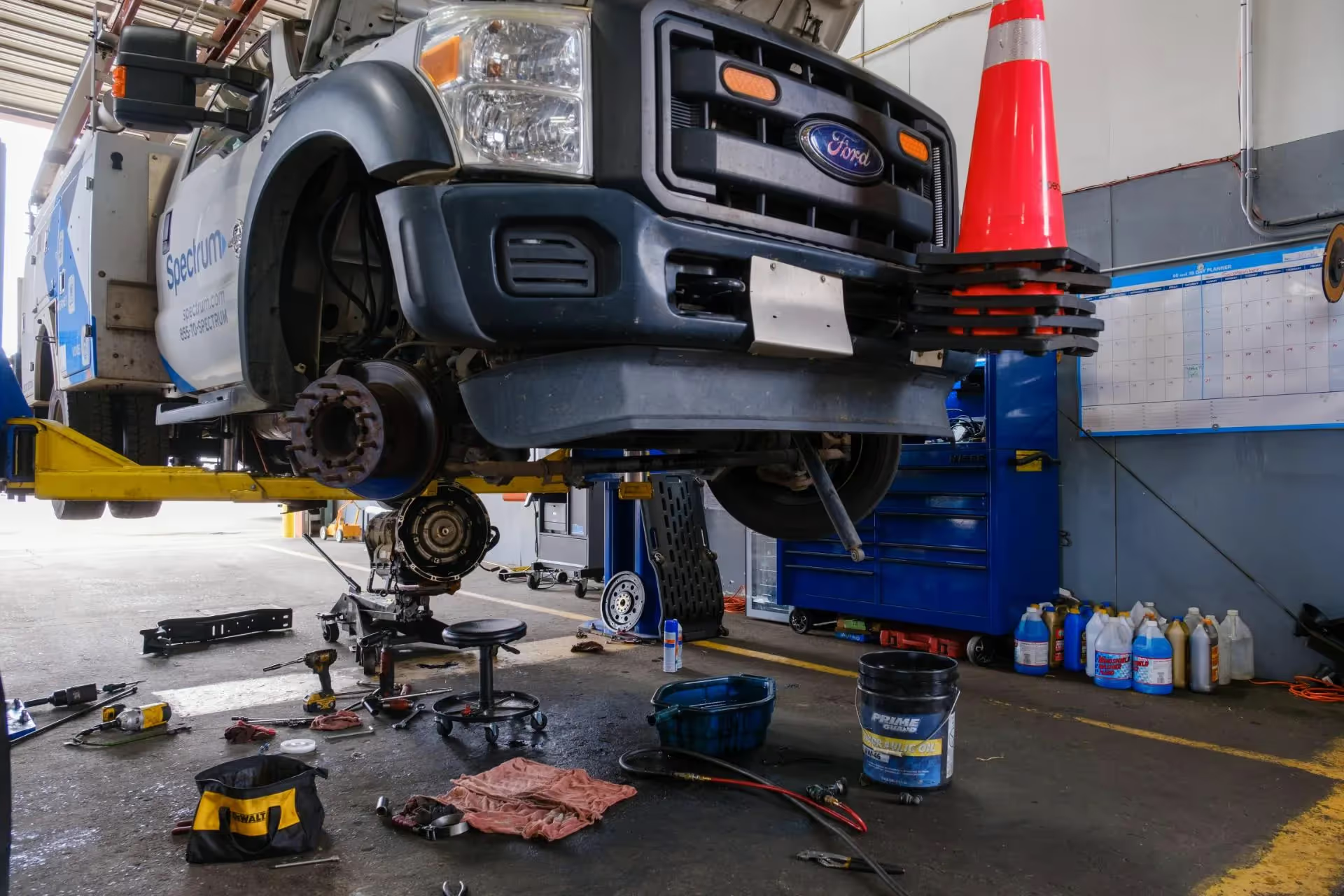
National Fleet Management repairs and replaces heavy-duty truck axles - including axle shafts, wheel bearings, seals, and hub assemblies - for steer, drive, and trailer axles. Work is done at our full-service shops in Charlotte, Greensboro, Durham, and Statesville, NC, plus mobile axle service across our coverage area for fleets that can't afford the downtime of a shop visit.

Body Work
Are you looking for a shop that does body work on heavy-duty trucks? Well, you can stop looking, for we here at National Fleet Management offer a wide range of bodywork services. From body panels to roofing and everything in between, National Fleet Management is the place to be.
Brake Repair
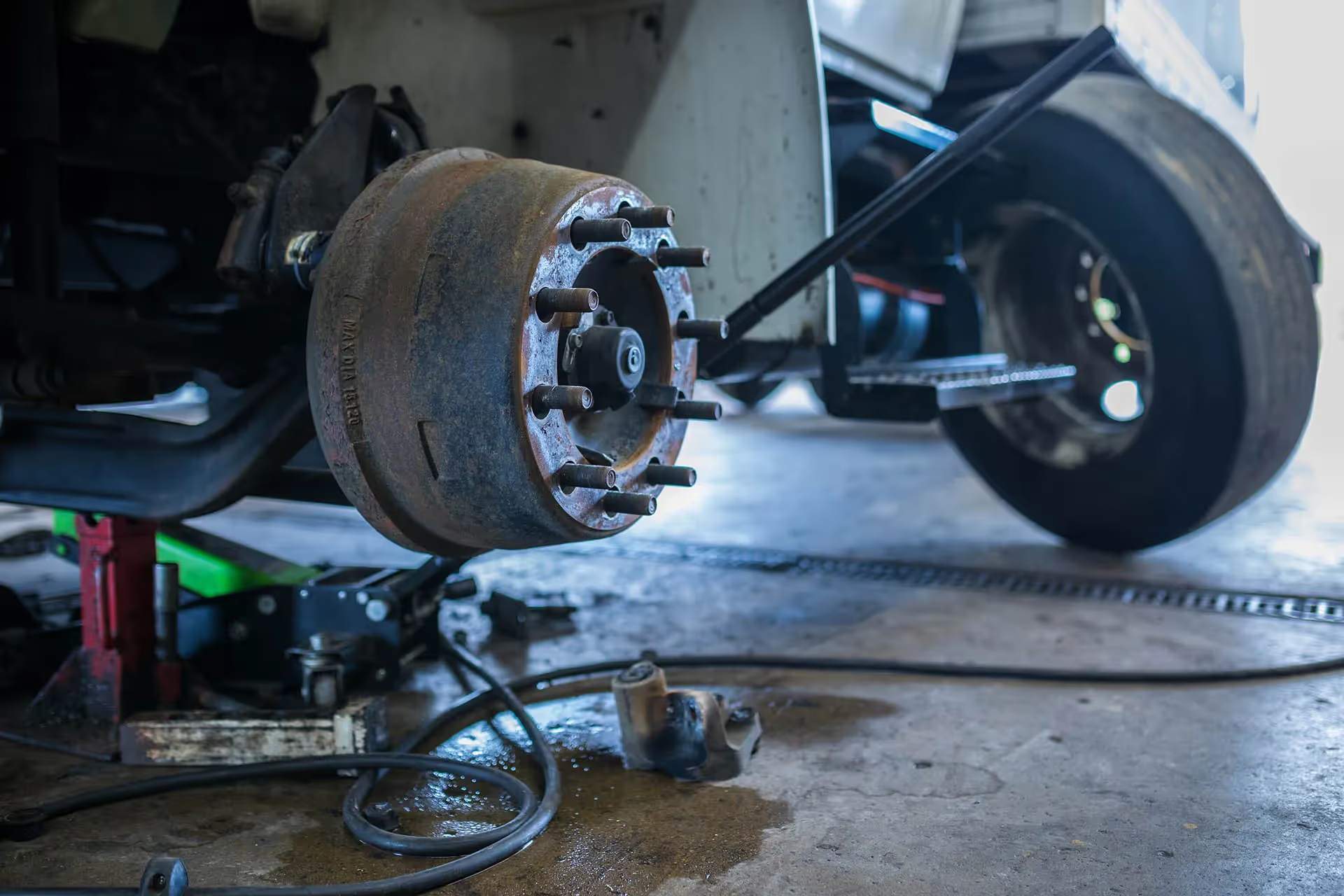
Are you looking to get your heavy-duty brakes serviced? Whether you use an air-based setup or more traditional fluid systems, you’ll find the services you need here at National Fleet Management. Contact us today to book an appointment.
Coolant System Repair
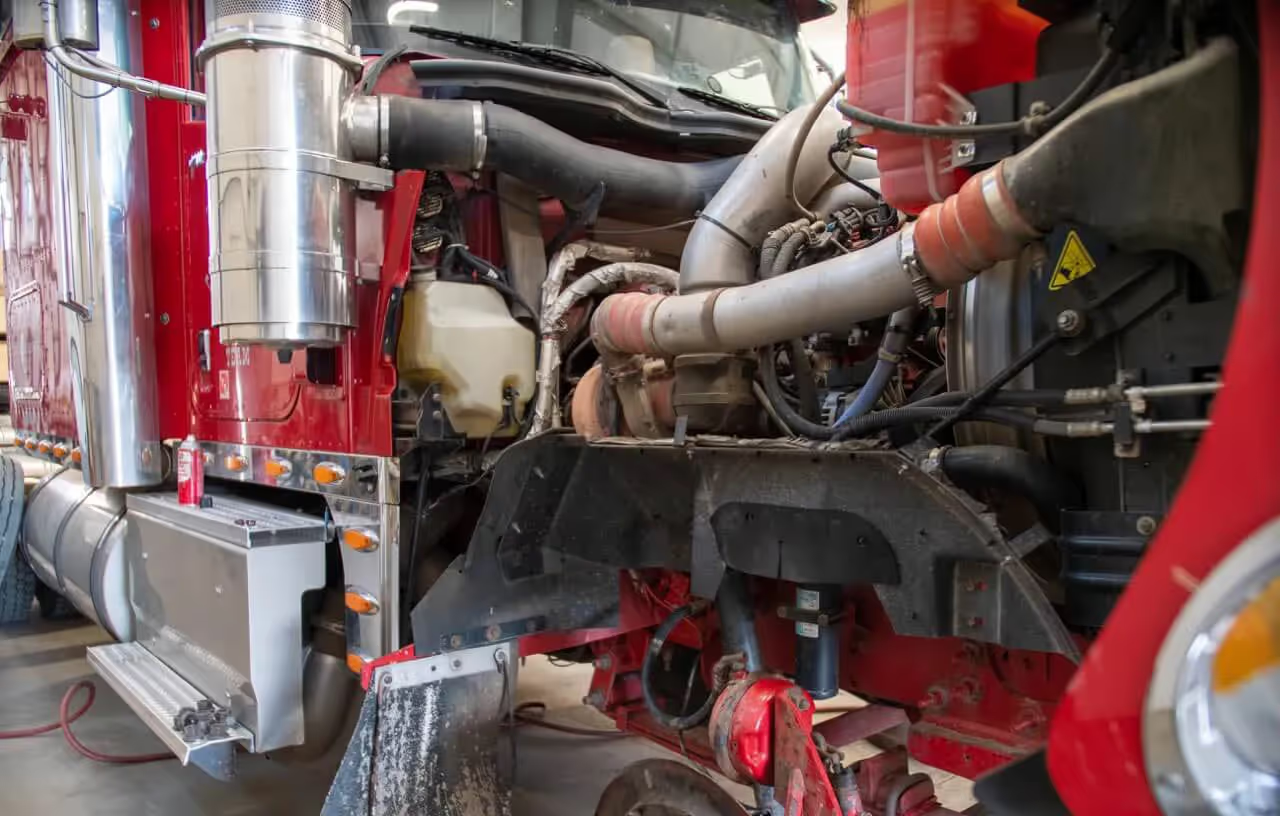
Are you in need of coolant system repairs? Maybe the engine in one of your trucks is overheating, and you can’t figure out why. Not to worry! We here at National Fleet Management are coolant system experts. We maintain and repair coolant systems of all kinds on almost a daily basis! Call today to book an appointment.
Diagnostics & Electrical Repair
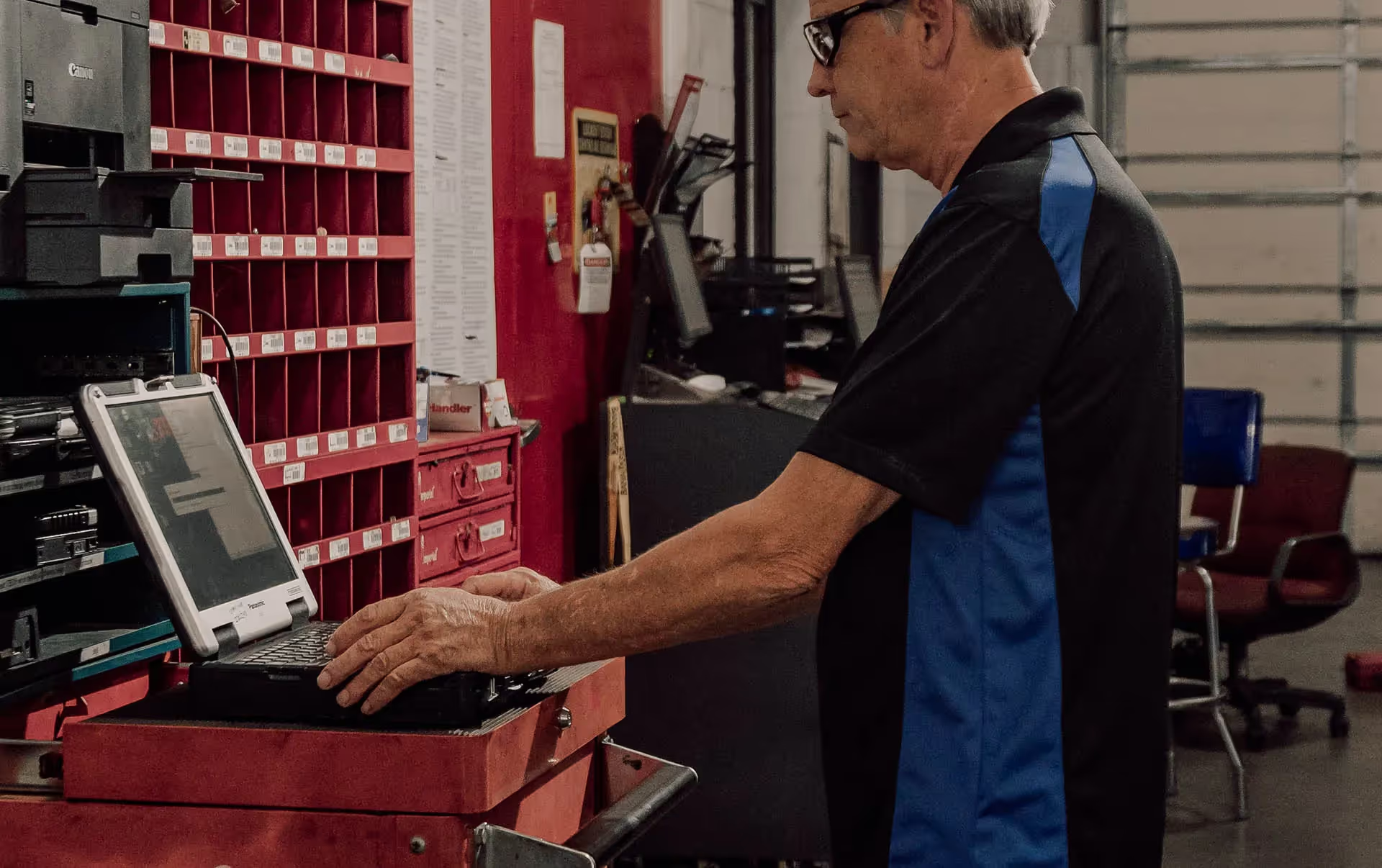
Are you having electrical problems? Are you looking for a heavy-duty shop to fix those issues? Well, you can stop looking! We here at National Fleet Management are diagnostics experts! We’ll have any and all electrical issues sorted out before you know it! Call today to book an appointment for service.
Drivetrain Repair
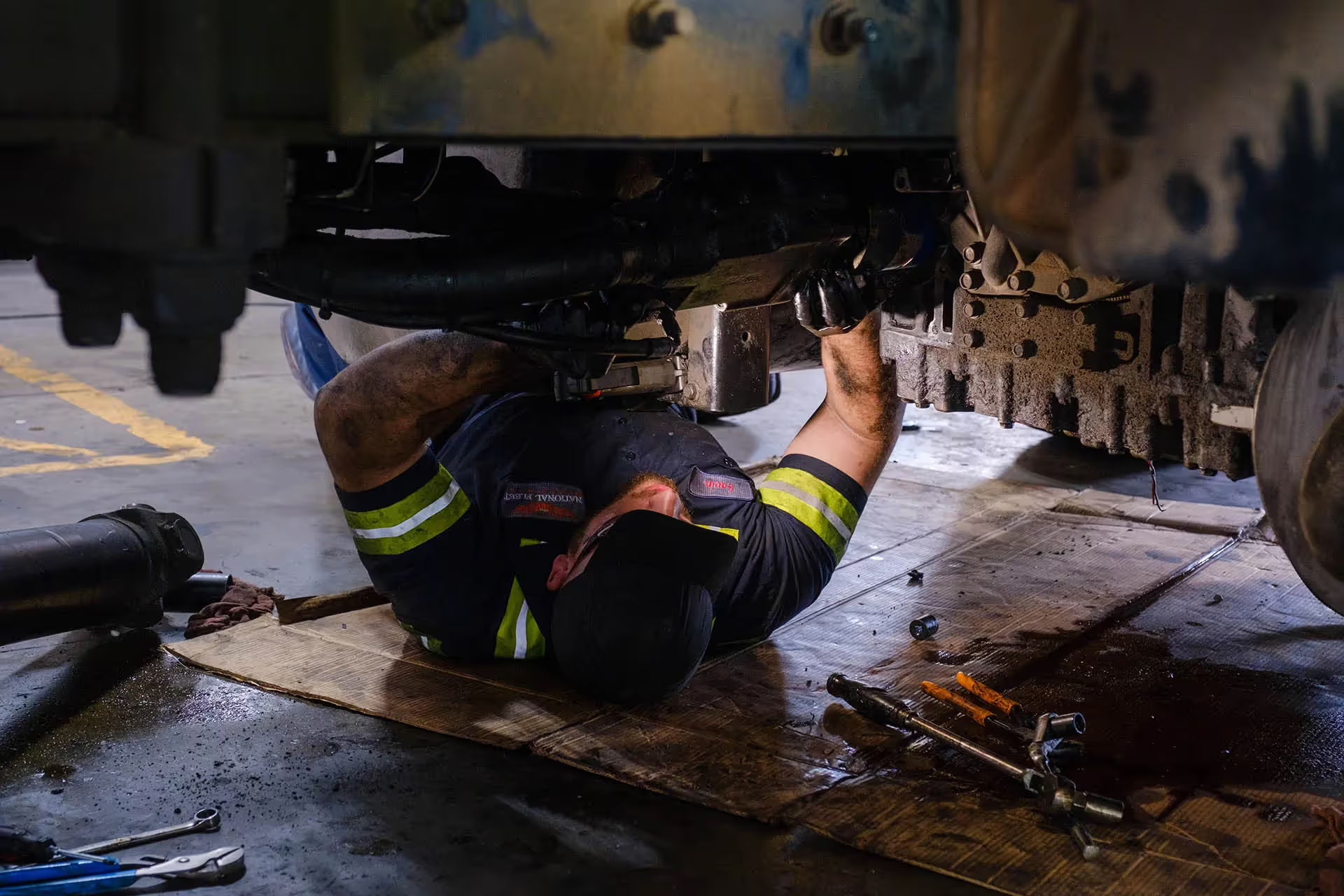
With a full roster of technicians and over a decade of experience in the heavy-duty repair industry, National Fleet Management has the services you and your fleet deserve. For all your drivetrain needs, give us a call, and we’ll book you an appointment.
EGR & DPF
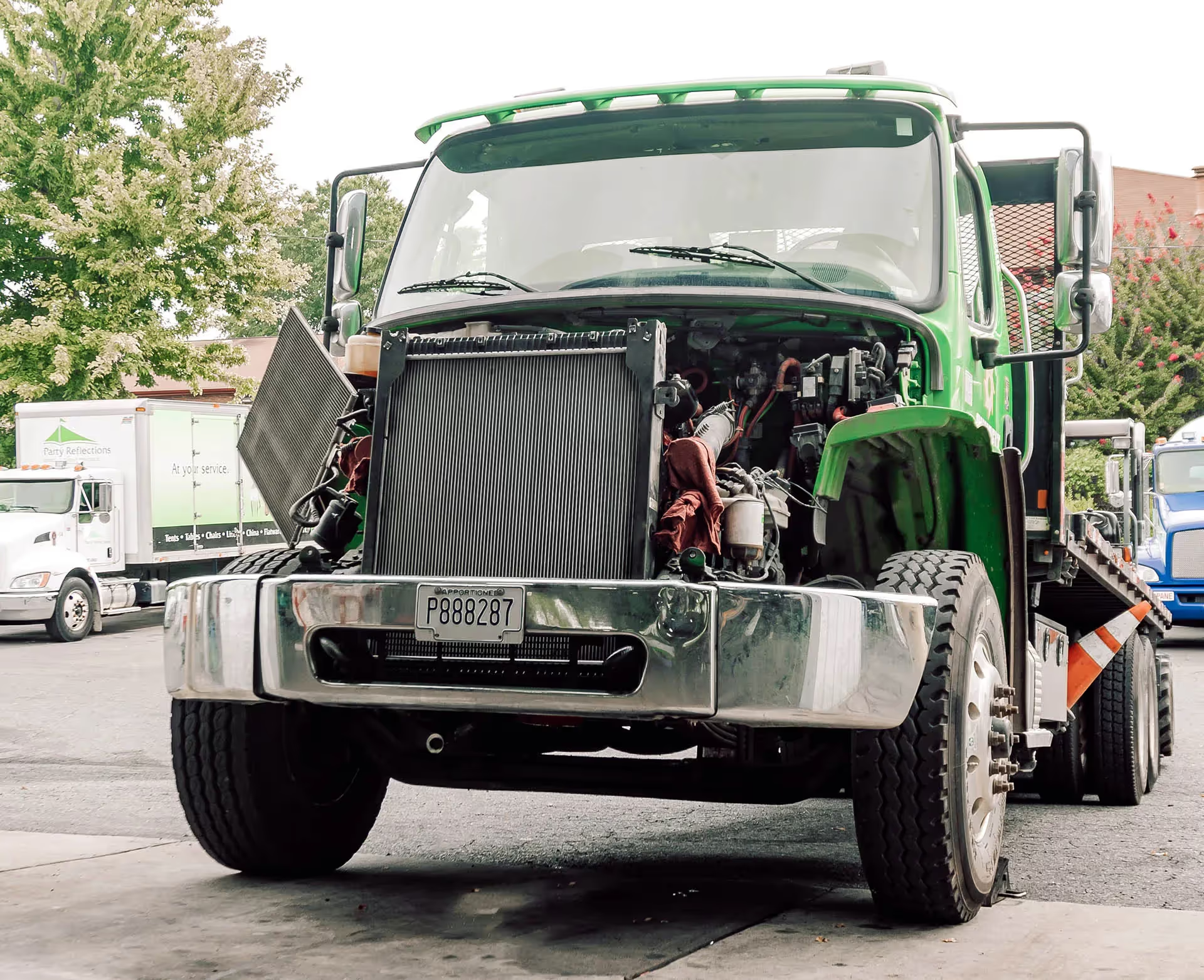
Are you looking for a shop that works on emissions control systems? Well, you’ve found one! We here at National Fleet Management are emissions control experts. We do everything from EGR repairs to catalytic converter replacements. Call today to book an appointment.
Engine Repair, Rebuild & Conversion
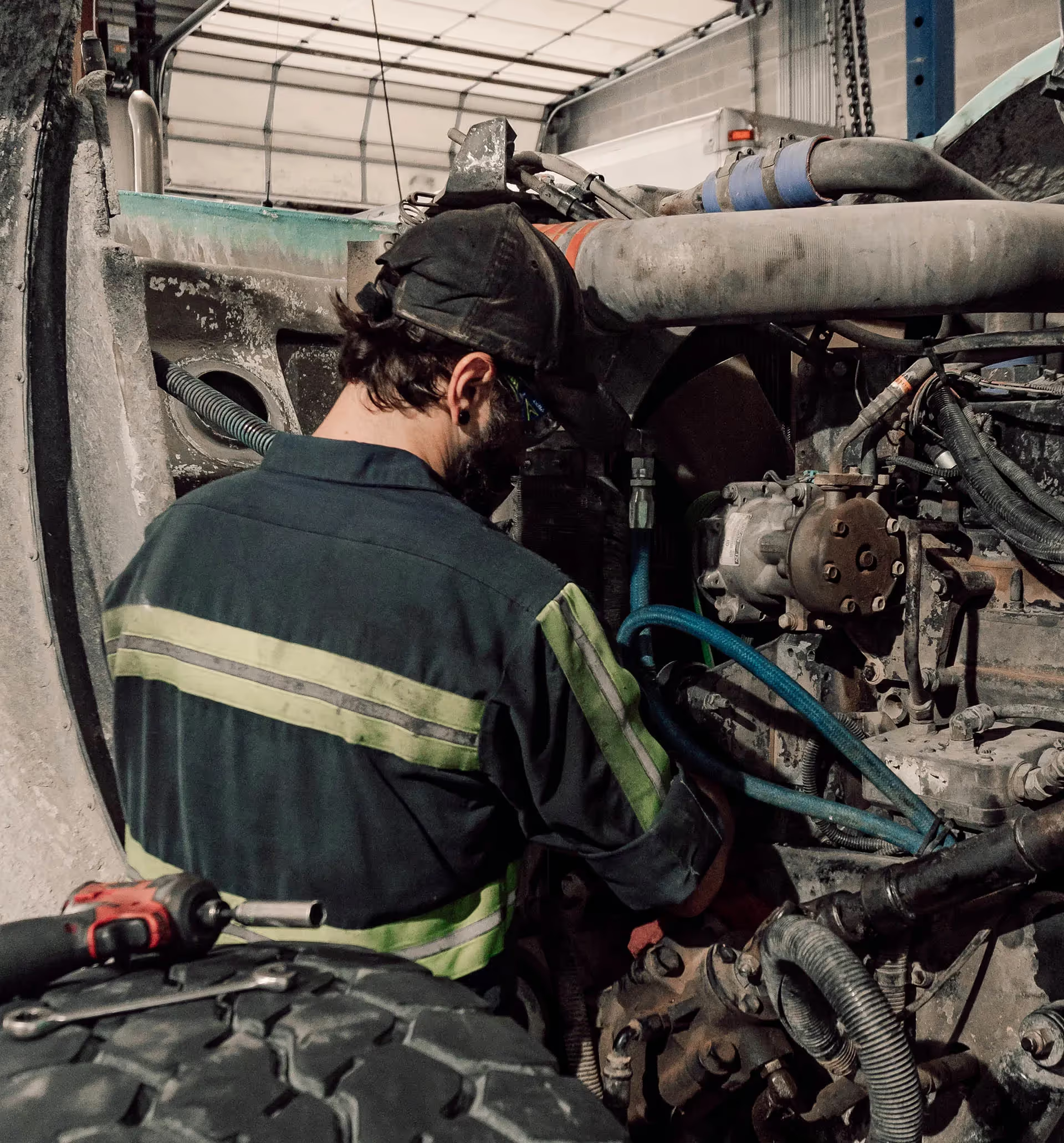
National Fleet Management is a heavy-duty repair shop that does engine rebuilds, repairs, and conversions of all kinds. Whether you’ve blown a head gasket or want to swap your engine out entirely, you can rest well knowing our technicians have your back. Call today to book an appointment.
Exhaust System Repair
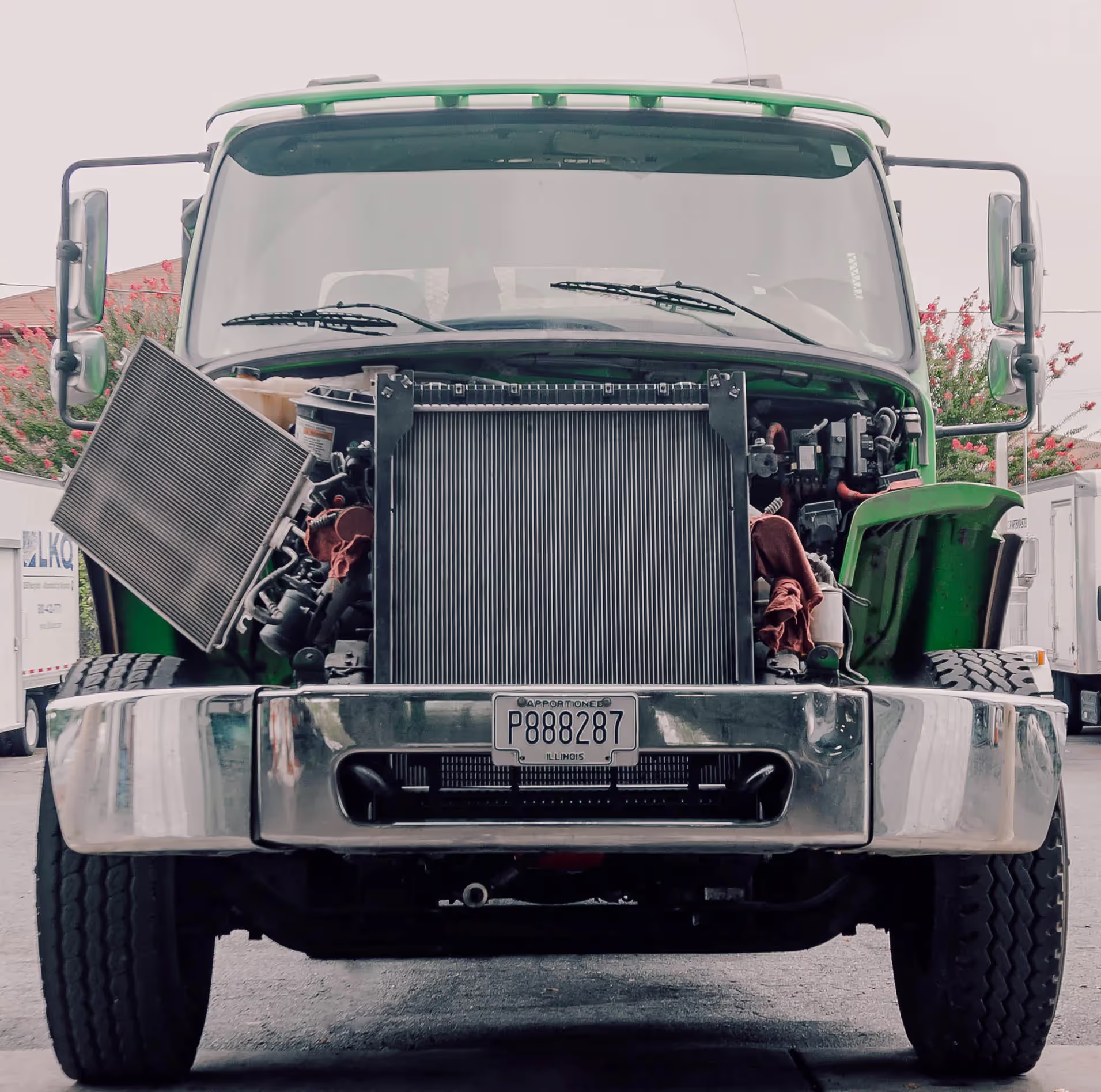
Whether it be exhaust leaks or damaged heat shields, you’ll be able to find high-quality repair services here at National Fleet Management. With over a decade of experience in the heavy-duty repair industry, we’ve got you covered. Contact us today to book an appointment.
Express Lube
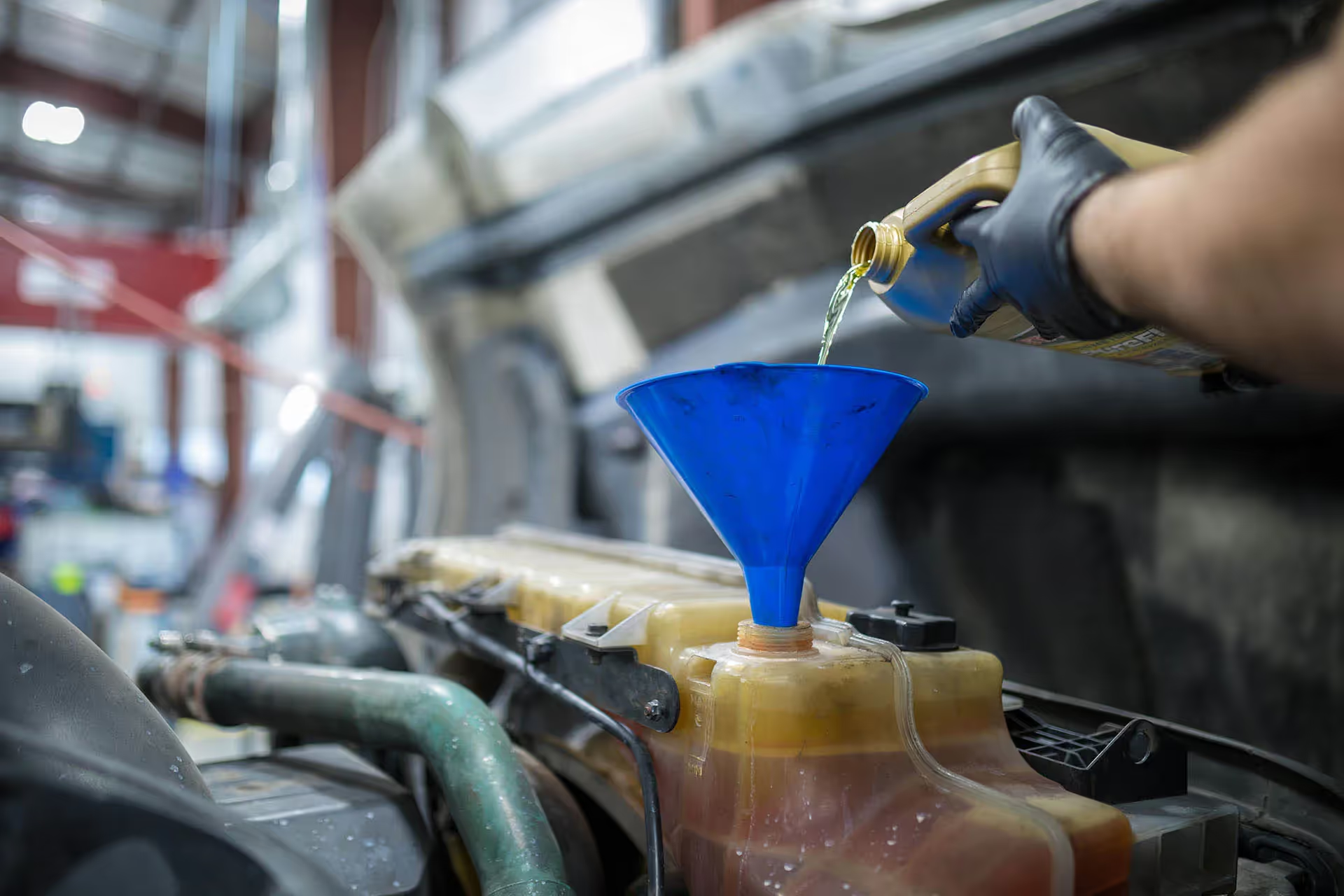
Our express lube services here at National Fleet Management are designed to fulfill the oil and fluid needs of any preventive maintenance regimen. Whether you need an engine oil change or a new transmission fluid, our express lube technicians will have your fluids changed in a jiffy!
.avif)
HVAC System Repair
Is your HVAC system struggling to keep up with North American weather? Maybe it doesn’t blow cold enough in the summer or doesn’t heat up enough in the winter. Here at National Fleet Management, we’ve got a wide selection of services that are sure to meet your every need.
Oil & Fluid
Changing oil and fluids regularly is the most important aspect of any preventive maintenance regimen. Here at National Fleet Management, we have oil and fluid services of all kinds. Whether you need a transmission fluid change or a coolant flush, we’ve got you covered.
Suspension Repair
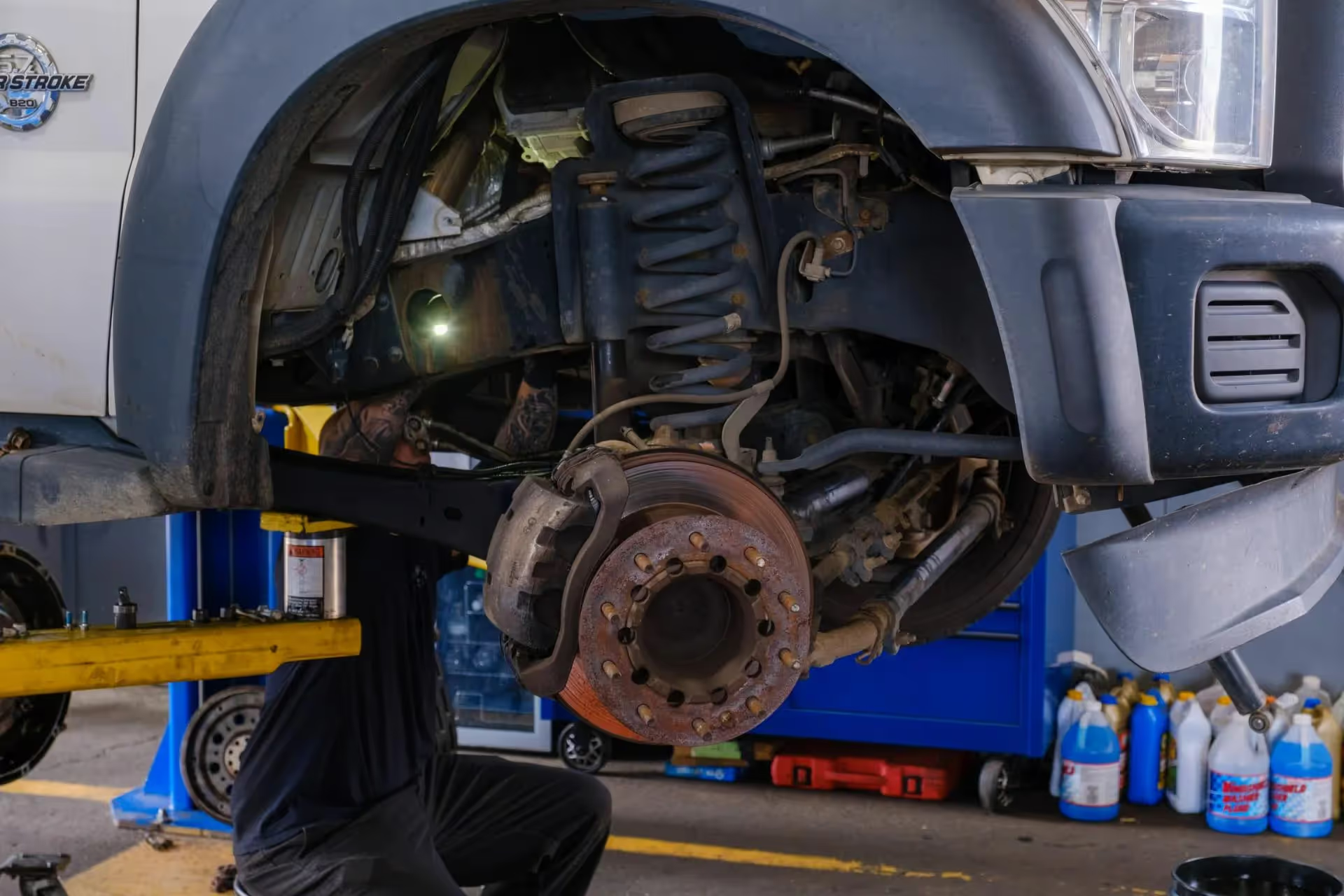
Do you want to get your heavy-duty truck’s suspension repaired or maintained? Well, looks like you’ve come to the right place! Here at National Fleet Management, we offer suspension services of all kinds. Whether you need new bushings or repaired shock absorbers, we’ve got your back.

Transmission & Clutch Repair
National Fleet Management repairs and services heavy-duty truck transmissions and clutches - from fluid changes and shift motor repair to full transmission rebuilds and clutch replacement - at our Charlotte, Greensboro, Durham, and Statesville, NC shops, with mobile service available across our coverage area.