704-676-6023
Articles
Statesville Propane Delivery Fleets: Spot Hose and Valve Problems Before Winter
Quick Answer
Common propane delivery hose and valve problems include exposed hose reinforcement, bulging, worn couplings, leaking connections, corroded discharge piping, and malfunctioning shutoff valves. Statesville propane fleets can reduce winter delivery interruptions by identifying these defects early, completing required monthly inspections, and arranging qualified repairs before returning defective equipment to service.
Key Takeaways
- Inspect delivery hoses for physical damage: Exposed reinforcement, permanent kinks, soft spots, and bulging indicate compromised hose integrity.
- Monitor couplings and fittings: Excessive wear, damaged connections, and corrosion can compromise discharge system safety.
- Address valve malfunctions immediately: Unresponsive shutoff valves and defective emergency discharge controls require qualified assessment.
- Never ignore suspected propane leaks: Stop affected operations and follow established emergency response procedures.
- Maintain federal inspection compliance: Applicable discharge systems require monthly inspections, testing, and documentation under 49 CFR § 180.416.
- Schedule maintenance before peak winter demand: Proactive repairs help Statesville propane fleets reduce preventable downtime and maintain delivery schedules.
Your propane delivery truck might run perfectly along I-40 and I-77, yet a damaged hose coupling could bring your entire delivery schedule to a halt. As heating demand increases across Statesville and Iredell County, repeated deliveries expose existing weaknesses in your discharge equipment.
Recognizing propane delivery hose and valve problems before winter arrives can help you prevent service interruptions, protect your operators, and maintain safer propane distribution operations.
Why Winter Deliveries Increase Propane Equipment Wear
November in Statesville brings average daytime highs around 60°F and overnight lows near 34°F. Although these conditions aren't particularly extreme, falling temperatures increase residential and commercial heating demand.
Every additional delivery means another cycle of hose deployment, connection, disconnection, and retraction. Over time, this repeated handling contributes to equipment deterioration, particularly among bobtail trucks serving multiple customers daily.
Agricultural deliveries throughout rural Iredell and Alexander counties can also involve uneven surfaces and extended hose runs. Staying ahead of equipment deterioration through propane delivery truck maintenance becomes increasingly important as winter schedules fill up.
5 Warning Signs of Propane Delivery Hose and Valve Problems
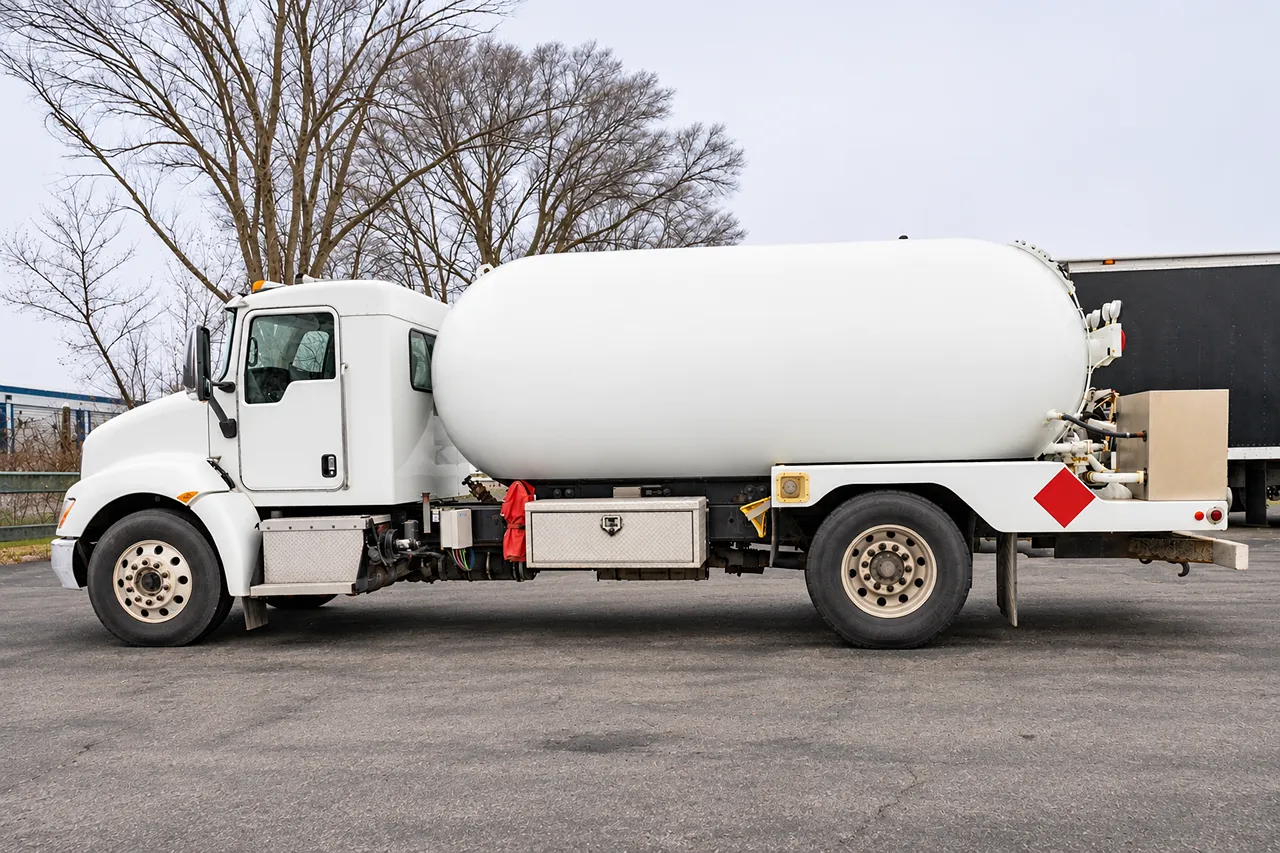
Propane bobtail trucks rely on hoses, couplings, valves, and discharge piping to transfer pressurized propane safely. Identifying deterioration in these components before your trucks leave the distribution facility can prevent unnecessary downtime.
1. Worn or Damaged Propane Delivery Hoses
Repeated deployment, dragging, improper storage, and contact with abrasive surfaces can damage a delivery hose's protective outer covering. Once that covering deteriorates, the underlying reinforcement becomes increasingly vulnerable to damage.
During a propane delivery hose inspection, look for the following warning signs:
- Cuts or abrasions that expose hose reinforcement.
- Permanent kinks or flattened wire reinforcement.
- Soft spots when the hose is unpressurized.
- Visible bulging during normal operation.
- Loose or deteriorating outer coverings.
- Damaged or excessively worn hose couplings.
Federal regulations prohibit using delivery hoses with specified rejection defects for unloading liquefied compressed gases. Remove affected equipment from service and arrange professional propane truck hose repair or replacement rather than relying on improvised patches.
LII / Legal Information Institute+1
2. Damaged Hose Couplings and Fittings
Your drivers handle hose couplings at virtually every customer stop. Repeated connections, accidental impacts, and excessive mechanical strain can contribute to premature component wear.
Watch for damaged connection hardware, excessively worn couplings, missing fasteners, and signs that a coupling has shifted relative to the hose. Difficulty establishing a normal connection also warrants professional assessment.
Rainy November conditions can expose metal components to additional moisture, making existing corrosion particularly important to identify. Addressing these defects through propane bobtail truck repair helps prevent compromised connections from interrupting scheduled deliveries.
3. Malfunctioning Discharge and Shutoff Valves
Discharge and shutoff valves regulate propane movement through your truck's delivery system. When these components malfunction, operators may lose the ability to control or interrupt product flow properly.
Different valve components serve different purposes:
- Manual shutoff valves: Allow operators to control propane flow manually.
- Internal self-closing stop valves: Provide an important means of stopping product discharge.
- Emergency discharge controls: Activate designated shutoff mechanisms during emergencies.
Unresponsive controls, abnormal valve movement, defective closure mechanisms, and observable leakage all warrant attention. Never force a malfunctioning valve or bypass an emergency discharge control to complete a delivery.
Arrange qualified propane truck valve repair whenever operators identify abnormal valve operation. Professional propane truck and trailer repair can address damaged components before the equipment returns to delivery operations.
4. Leaking Connections and Deteriorating Discharge Piping
Your delivery hose isn't the only component susceptible to deterioration. Discharge piping, flexible connectors, seals, and fittings also require regular attention to maintain system integrity.
Potential warning signs of propane discharge system leaks include an unexpected propane odor, unexplained hissing, and unusual localized frost around connections. Severe corrosion, deteriorating seals, and damaged piping also warrant professional evaluation.
If you suspect a propane leak, stop affected operations, move people away from the hazard, avoid ignition sources, and follow your company's emergency response procedures. Contact emergency responders from a safe location when necessary, and arrange qualified assistance before resuming operations.
These precautions apply to propane bobtail trucks and transport trailers alike.
5. Overdue Hose and Valve Inspections
Sometimes, the biggest warning sign isn't visible on the equipment itself. Missing inspection records, overdue valve tests, and unresolved driver defect reports can indicate gaps in your maintenance program.
Maintain accurate records for individual hose assemblies and review outstanding repairs before assigning trucks to winter routes. Even equipment that sees limited use requires applicable inspections while it remains in service.
Federal Inspection Requirements for Propane Delivery Trucks
Under 49 CFR § 180.416, applicable cargo tank operators must follow specific discharge-system inspection, maintenance, and documentation requirements.
These requirements include:
- Monthly visual inspections of in-service delivery hose assemblies and cargo tank piping.
- Monthly operational checks of applicable emergency discharge controls.
- Monthly leakage checks of internal self-closing stop valves in liquid discharge openings.
- Post-delivery visual checks of the deployed hose section.
- Documentation of required monthly inspections and tests.
Additionally, 49 CFR § 177.840(m) establishes applicable pre-unloading inspection requirements for readily observable discharge-system components.
Routine driver observations do not replace formal inspections or required testing. Qualified personnel must perform applicable procedures, and repaired hose assemblies must successfully complete required testing before returning to service.
Scheduling Preventive Propane Fleet Maintenance Before Winter
Waiting until a hose fails or a valve malfunctions can leave your dispatch team scrambling to reassign deliveries. Instead, coordinate equipment inspections and repairs during November, before winter heating demand places additional pressure on vehicle availability.
An effective propane fleet preventive maintenance program should include:
- Tracking individual hose identification numbers and inspection deadlines.
- Reviewing driver-reported discharge system defects.
- Scheduling required inspections and testing with qualified personnel.
- Coordinating component replacements around delivery commitments.
- Confirming that repaired equipment meets applicable return-to-service requirements.
Working with a provider of commercial fleet maintenance services can simplify maintenance scheduling and help you manage equipment availability across multiple vehicles.
Whether your trucks serve residential neighborhoods around Statesville or commercial customers along U.S. Highway 70, proactive maintenance helps keep your delivery commitments manageable.
Prepare Your Propane Delivery Fleet for Winter With National Fleet Management
Damaged hoses, worn fittings, malfunctioning valves, and deteriorating discharge piping can compromise equipment safety and disrupt winter deliveries. Identifying these problems early, maintaining accurate inspection records, and arranging qualified repairs can reduce preventable downtime.
National Fleet Management in Statesville, NC, provides specialized propane truck and trailer repairs, including hose and valve repair and replacement.
Contact our team at National Fleet Management today to discuss your propane delivery equipment concerns and arrange professional maintenance before winter delivery demand increases.
Frequently Asked Questions
How often should propane delivery truck hoses be inspected?
Under 49 CFR § 180.416, applicable propane delivery hose assemblies require visual inspections at least once every calendar month they remain in service. Operators must also visually check the deployed portion after each unloading, while applicable pre-unloading checks must follow federal requirements.
What are the signs of a damaged propane delivery hose?
Exposed reinforcement, permanent deformation, soft spots, bulging, loose outer coverings, and damaged couplings indicate potential hose failure. Operators must remove hose assemblies that meet federal rejection criteria from unloading operations and arrange qualified assessment.
Can a damaged propane delivery hose be repaired?
Certain hose defects may qualify for professional repair under applicable regulations. However, repaired hose assemblies must pass the required testing and inspection before returning to service. Improvised patches and unapproved repairs are not acceptable solutions.
Why do propane truck shutoff valves malfunction?
Mechanical wear, damaged closure mechanisms, corrosion, and deteriorating seals can contribute to shutoff valve problems. Qualified personnel should assess abnormal valve operation and perform repairs according to applicable regulatory and equipment manufacturer requirements.
Does cold weather damage propane delivery hoses?
Cold weather does not automatically damage propane delivery hoses. However, increased winter delivery frequency can accelerate existing wear, while moisture and changing operating conditions make consistent equipment inspections particularly important.
Schedule service with National Fleet Management today!
More Articles

How Charlotte Fleet Managers Can Reduce Spare-Truck Dependence
Keeping extra trucks available for breakdowns can drain your fleet budget. Discover how Charlotte fleet managers can reduce spare-truck dependence through scheduled mobile maintenance, early problem detection, and smarter service coordination without sacrificing backup capacity.
Read more

Fall Electrical Maintenance: Preparing North Carolina Commercial Trucks for Cooler Mornings
Cooler October mornings can expose weak batteries, failing alternators, and damaged wiring in North Carolina commercial trucks. Learn which electrical warning signs to watch for, how preventative testing protects your fleet, and why fall maintenance helps reduce downtime.
Read more